
Most Indian engineers and grad students on OPT don’t realize they’ve been paying a tax they legally don’t owe. Look at your last few pay stubs. Two lines — Social Security and Medicare, together called FICA — add up to 7.65% of every paycheck. If you’re on F-1 status working on OPT, the IRS says you shouldn’t be paying either one. An OPT FICA tax refund is often sitting there unclaimed, sometimes worth $2,000 or more a year.
Why You Qualify for an OPT FICA Tax Refund
The exemption comes from the IRS’s “nonresident alien” rule for foreign students. Under Internal Revenue Code Section 3121(b)(19), F-1, J-1, M-1, and Q-1 visa holders are exempt from Social Security and Medicare withholding. This applies as long as they’re nonresident aliens for tax purposes working under OPT or CPT authorization. You’re generally treated as a nonresident alien for your first five calendar years on F-1 status. That means 2022 through 2026, for example, if you first arrived in fall 2022. Your actual status depends on the Substantial Presence Test and the exemption described in IRS Publication 519.
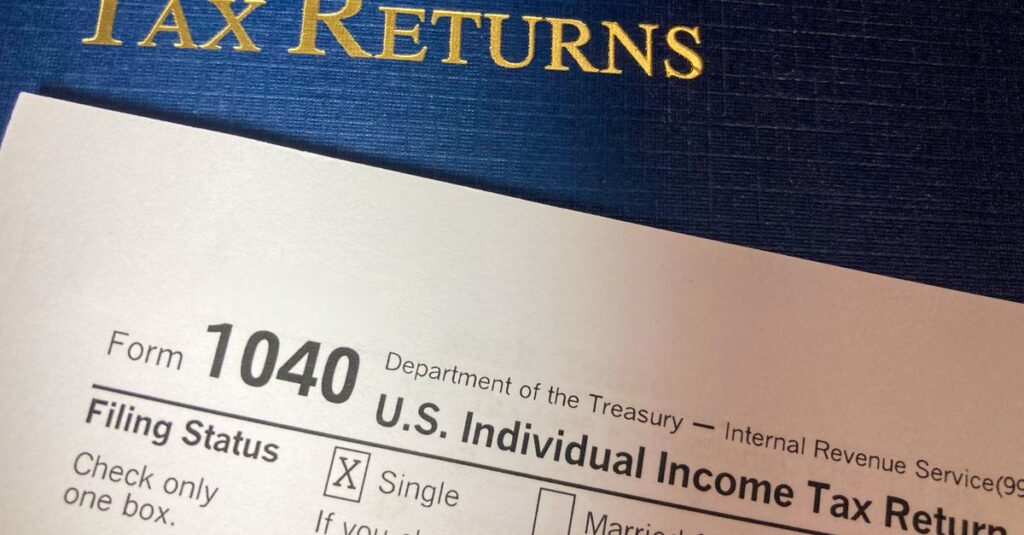
Say you’re on OPT earning $75,000 a year. FICA at 7.65% comes to $5,737.50 withheld over the year. That’s money your employer’s payroll system pulled by default, not because you owed it. Most university international student offices mention this exemption once during orientation and never again. Most corporate payroll departments don’t distinguish OPT employees from regular W-2 hires unless HR flags it manually.
How Much Your OPT FICA Tax Refund Could Actually Be
The number scales directly with your salary, since FICA is a flat percentage:
| Annual OPT Salary | FICA Withheld (7.65%) |
|---|---|
| $50,000 | $3,825 |
| $65,000 | $4,972.50 |
| $75,000 | $5,737.50 |
| $90,000 | $6,885 |
If you only worked part of the calendar year on OPT — say you started in August — prorate against what you actually earned, not your annualized salary. Many Indian students stack this with wages from a summer internship earned while still on F-1 CPT. That internship income also qualifies and adds to your total refund.
A Treaty Benefit Most Indian Students Don’t Know Exists Either
Separately from FICA, Article 21(2) of the India-US tax treaty gives Indian students and business apprentices a real advantage. It lets you claim the standard deduction on your US federal return. Nonresident aliens from almost every other treaty country can’t do this — they’re normally restricted to itemized deductions only. This isn’t the OPT FICA tax refund itself, but it’s missed by the same population for the same reason: nobody flags it. Most nonresident tax software won’t apply it automatically unless you specifically select “India” as your treaty country. Combined with your FICA refund, this treaty provision often lowers your income tax bill in the same year you recover the FICA overpayment.
Step 1: Ask Your Employer to Fix It First
Before involving the IRS, go to your payroll or HR department directly. If FICA was withheld in error during the current calendar year, employers can usually correct it themselves. They adjust your next paychecks and refund what was already withheld — the fastest path to your OPT FICA tax refund, sometimes resolved within a single pay cycle. Bring your I-20, your most recent I-94 record, and a short note citing the F-1 FICA exemption under IRC Section 3121(b)(19).
If the over-withholding happened in a prior calendar year, most employers can no longer adjust it internally. That’s when you file with the IRS directly.
Step 2: File for Your OPT FICA Tax Refund With Form 843
When your employer won’t or can’t refund you, the IRS lets you claim the money back yourself. You’ll need:
- Form 843 (Claim for Refund and Request for Abatement) — the actual refund request
- Form 8316 (Information Regarding Request for Refund of Social Security Tax) — confirms you asked your employer first and were refused
- A copy of your W-2 for the year in question
- Copies of your I-20, EAD card, and I-94 arrival/departure record
- A signed statement from your employer showing they will not issue the refund
Mail the package to the IRS service center listed in the Form 843 instructions for your state — there’s no online filing option. Processing is slow; six months to over a year isn’t unusual. File as soon as you’ve confirmed your employer won’t correct it, and keep copies of everything you send. Use certified mail with a return receipt. If the IRS loses the packet or takes longer than expected, you’ll want proof of your original filing date, since that’s what protects you against the statute of limitations.
If you don’t hear back within six months, you can call the IRS directly, but be prepared for long hold times specific to nonresident alien accounts. Some filers resubmit a duplicate packet with a cover note after nine months of silence rather than wait indefinitely. This is allowed and doesn’t restart your claim, since the original filing date still governs.
Step 3: Know When the Exemption Ends
The FICA exemption stops the moment your immigration status changes to H-1B — typically October 1st following the cap lottery. It also ends whenever you stop being an F-1 nonresident alien under the Substantial Presence Test. From that date forward, FICA withholding is correct and required. Only wages earned during your OPT period, while still a nonresident alien, qualify for an OPT FICA tax refund. A paycheck issued after your H-1B start date won’t. Our guide to filing your first H-1B tax year covers what changes once you cross over.
FAQ
Can I claim an OPT FICA tax refund for more than one tax year?
Yes. You can file a separate Form 843 for each calendar year you were over-withheld. You just need to still be within the statute of limitations — generally three years from the date the original return was filed.
Does my employer get in trouble for withholding FICA by mistake?
No. This is a common payroll error, not fraud. Employers routinely correct it once notified, and the IRS refund process exists specifically for cases where they don’t.
What if I’m on STEM OPT instead of regular OPT?
The same exemption applies. STEM OPT extensions are still F-1 status, so the FICA exemption continues as long as you remain a nonresident alien under the Substantial Presence Test.
Do I need a tax professional to file Form 843?
Not necessarily — the form and instructions are written for individual filers. But if your case involves multiple employers or multiple tax years, a CPA familiar with nonresident alien taxation can save you from a rejected claim over a paperwork error.
I already filed as a resident alien by mistake — does that affect my OPT FICA tax refund claim?
It complicates it. If you filed Form 1040 (resident) instead of Form 1040-NR (nonresident) for a year you were still within your five-year exempt period, you may need to amend that return first. The IRS wants your filings to be consistent about your residency status before it processes a related FICA refund claim.
Can my university’s international student office file this for me?
No. International student offices can point you to the forms and confirm your visa timeline. Form 843 and Form 8316 still have to be filed by you, or by a paid preparer acting on your behalf.
Quick Summary
- F-1 students on OPT are exempt from FICA (Social Security + Medicare) under IRC Section 3121(b)(19), while classified as nonresident aliens.
- Ask your employer to correct current-year withholding first; for prior years, file IRS Form 843 plus Form 8316 for your OPT FICA tax refund.
- The exemption ends once your status changes to H-1B or you stop qualifying as a nonresident alien — wages after that point are correctly FICA-taxed.
This post is for informational purposes only and does not constitute financial, tax, or legal advice. Laws and regulations change frequently. Please consult a qualified professional for your specific situation.